Monday, January 12, 2015

The Anime and Manga District

     Our first stop on Monday was the anime and manga district of Akihabara. Our guide, Charlie, took us from the station to our first stop, Yodobashi Camera. This is a large electronic store in the Akihabara district. From there we chose a meeting point and time, after which, we were allowed to explore the district for until around 1:15. My roommate and I decided to try a cat cafe to start with. While walking there, we saw many different types of anime and manga stores. Many had large towels or signs with the faces of popular anime characters as advertising. Even the cat cafe had some cute manga drawings around the outside of the cafe.

     We did a bit of window shopping during the free time because many of the shops were to crowded with people and products to go inside. I was surprised to see that there were a frequent amount of shops dedicated only to claw and crane machines. However, these machines did not have the usual cheap toys that we our used to seeing in America. Many of the machines had anime figures and cute plush toys that would usually cost a lot online or in any other store. I'm proud to say I was able to win one time at one of these shops.
     There was also a great deal of Maid cafes in this district. I have seen many references to maid cafes and cos-play cafes in different anime that i have seen, so it was quite interesting to see them in real life. We passed many girls dressed as maids on the street trying to get customers to come to their cafe. It was honestly quite unnerving considering these cafes are mainly frequented by men.

     One of the last places we stopped at while exploring was the store Radio Kaikan. This is an eight story building containing all types stores centered around anime and manga. Many of the stores were solely for manga and magazines about anime. Others looked similar to a blockbuster but only for anime films. A lot of the shops had things called cellphone charms. These are similar to key chains except they have a thin string that can be used to tie them to your cellphone. They had all types of these charms at the front of what seemed like every store we passed. I did buy two of these as souvenirs for friends of mine.

     One last thing I noticed while out was the number ball machines. These machines are similar to those you might see outside of a Kroger or a Walgreen's at home. They were stacked like walls along the street. You could put a coin in and get anything from a cheap piece of jewelry to a cute little anime figure or even a plush toy.
     I must say there was one thing I was a bit shocked by while we were walking around all the shops. Many advertisements and posters featured well endowed anime girls in some pretty questionable poses. Some of these advertisements were large and covered entire parts of some buildings. It made it very obvious who their target audience was supposed to be.
      In light of this, I feel the need to give a sort explanation of what I meant by target audience. The main streets of Akihabara were populated mainly by teenage boys and younger men with the scattered girls here and there. I would compare this more to a comic convention in America filled with comic fans and the like. However, there were some back allies along the street that advertised cos-play cafes and maid cafes. These areas were a bit hidden and mainly populated by older men. It was a bit unsettling to walk past these areas, and though they might be perfectly safe, it left a sketchy feeling that did not give a good vibe.
     Despite this little disturbance, the rest of the morning went smoothly and was very fun. It was nice to be able to go out in small groups as opposed to one large group because I caused less of a scene. This of course made sight seeing much easier. It was also pretty interesting to walk around the streets I had seen so many times in all the anime I have watched. This sounds cliche but it felt like I was living in an anime show! I really wish we could have spent more time there, but I'm glad we the amount of time we did since it was longer than some of our other days.

I'm very excited to see the rest of Japan! Especially to see how much of it is like my anime and what is just made up just for TV.

- Emily W., Class of 2016 -

Studio Ghibli Museum


The Studio Ghibli Museum was the last stop on our itinerary today. The building was designed by Hayao Miyazaki himself, and one of his sons (an architect) helped to make it a reality, so the building is absolutely visually stunning.  To begin with, there is a false ticket booth with a life-size Totoro and soot sprites right near where visitors would walk in off the street.
Totoro and the Soot Sprites in the false ticket booth

Visitors enter through carved wooden doors with colorful stained glass windows complete with images of the most famous Ghibli characters.  Because we entered the museum right before sunset, the entry hallway was washed in colored light.  Bright frescoes of plants and sunshine cover the walls and ceiling.  From the entry hallway, we took a flight of stairs down into the belly of the building. 


Doorway to the Entry Hall
The museum is designed to be viewed from the bottom to the top, and so we started with the video short.  The shorts that are shown in the museum theater can only be seen there, and we were incredibly lucky to view them.  The tickets for the short are rare pieces of film from several of MIyazaki's films.  Although the short was in Japanese, my understanding of the story was as follows: A young boy is lost/ran away, and a beautiful woman takes him in, so he works for her in her supernaturally sized garden.  One day, he sells some giant radishes to a frog and a toad, and in return, they give him a planet seed.  The young boy proceeds to plant the planet, discovering that it has an atmosphere and is inhabited by roly-polies. Then, his parents return and take the boy back to the city.  However, the mole and the frog soon take him back to the beautiful lady, who turns out to be some sort of celestial being, and together, they release the planet into the solar system.
Stone Warrior 
After the video, we toured through the animation room, which displays Miyazaki's preferred method of animation.  The main draw of the room is a massive cylindrical glass case holding several figurines from Ghibli movies. Every minute or so, the figures begin to rotate at high speeds around a tree trunk.  With the accompanying flashing lights, the figures appear to go through a series of physical changes, hopping up and down or running through the sky.  I heard a rumor that Miyazaki won an award for the display.  The next floor has a replication of Miyazaki's own personal work spaces from the studio to the home, complete with original storyboards and character designs covering every visible surface.  The third and final floor had a Catbus play room for young children and a very small, very crowded gift shop.  From there, you can take an exterior metal spiral staircase up to the roof, where you can pose with a statue of a stone warrior from Castle in the Sky.

The Studio Ghibli Museum was a wonderful culmination of the imaginative and grand creations that Hayao Miyazaki and his studio are so famous for.  From bottom to top, top to bottom, every inch was built to inspire the next great animators and imaginations, and I have no doubt that the museum will continue to do just that.  

Sunday, January 11, 2015

Shibuya and Harajuku


  Yesterday morning was different from all mornings before. First off, it was actually pretty cold, secondly, we had a late start leading to a relaxing morning, and finally Charlie-san couldn't be there so we had the wonderful Oogi-san instead.
 
  After breakfast our guide led us out into the cold windy air. Most of us were wearing our cutest outfits in preparation for spending our day in two of Tokyo's biggest shopping districts. BJ was rocking her whiter tiger kiragumi and Shelby had on cat tights.
 
 Arriving in Shibuya's train station, we gazed out the window at the gigantic square teaming with people before us. As we left the station overlooking the square, our guide stopped to show us the statue of Hachi. Hachi was a dog renowned for his loyalty, and today his statue is a common meeting spot.
 
After that we headed over to 109, Shibuya's gigantic department store. We only had 30 minutes to shop there, so racing around the store was super hectic!Since fashion changes so quickly you are not allowed to take pictures in the stores, so that the shops can stay ahead of their competitors. The Shopgirls who run the shop are all very well dressed in their stores style of clothing, since they are their not just to man the register but to show of the store's style. We were all very disappointed to learn that most of the clothes only came in one size, which tended to be a bit small on us.
 
Displaying photo.JPG
We bought the skirts/dress at 109. Photo taken by the wonderful Morgan Dalton.
Pic Source Super Cute Pear Mascot!
 
 After Shibuya, we stopped by a temple and saw lots of ice sculptures. We always saw a traditional Japanese wedding and some of us tried Octopus balls (you could definitely taste the suckers on the tentacles).

Then we headed over to Harajuku, an area famous for its shops and its crepes. We had about 2 hours of free time here to shop and get lunch.While Harajuku had some big department stores, it also had lots of small shops. We had a meeting place outside of a shop called Kiddyland, which is like ToyRus. It has a pear mascot, who is super cute.
 
Some notable purchases are: Helen bought Elsa chopsticks because why not; Shelby got a skirt and sweater; BJ bought a great hat; and Gracie bought a skirt and jacket.


Gracie


Saturday, January 10, 2015

Shrines, Gods, and Foxes

Shinto shrines and Buddhist temples are scattered all throughout Japan, which the Japanese people visit at various times throughout the year. However, as we learned through our adventures today, because of its connection to the New Year, the month of January is considered an even luckier time to visit. This made visiting the two crowded shrines and one temple today...difficult to say the least.

The first Shinto shrine we visited today, the Namiyoke Inari Shrine, was not actually on our itinerary. Before we visited the Tsukiji fish market, our tour guide, Charlie-san, took us aside to a local shrine to be our meeting place before our next location. The fish market took less time than we expected, so we found ourselves with some spare time to look around the shrine. The architecture was beautiful, and we even got to learn some new things about Shinto tradition, one of which were the kitsune, or fox spirits. We found a small offering place in the back corner we were waiting in, with a handful of stone foxes with red bibs standing around it. The kitsune are seen as messengers of the gods, their shrine being called the Inari shrine, dedicated to the harvest. When we asked Charlie what the bibs were for, we were told that when a child dies prematurely, the mothers tie the baby's bib to the fox's statue. That way, the fox can get the child's scent and be able to find the child's soul in the underworld for the gods to go save.
All of this was very fascinating, but what really stood out to me at that shrine was something very personal that followed. Everything about the place just felt so peaceful. I saw the Japanese who were praying at the main shrine and saw all the things I'd learned about this semester at our research sessions and Religions of the World, and I knew I wanted to try. Isa and Shelby joined me, and together we followed the traditional procedure. We purified ourselves at the temizu by the entrance--a water basin with wooden ladles--by pouring water into our left hand and then our right. We stepped three times through a straw loop, left foot first, which is said to purify your mind (and as a side note, the left going first each time as it is believed to be less pure than the right), and we waited our turns to step up to the shrine. We each threw in a five yen coin to the offering...box, for lack of better word, shook a red rope which in turn rang a bell, which is said to call the kami, or gods', attention to you, bowed twice to show respect, then clapped twice, before each saying a prayer. Maybe it's bad luck to say, but I thanked the kami for letting us rest at its shrine, and wished that our group would have a fun, safe stay in Japan.

We also later visited the Senso-ji temple and Asakusa shrine, both of which were built right next to the other. Since Shinto is a very localized, native Japanese religion, when Buddhism first came to Japan, it was very easy for the two to coexist.

Senso-Ji Buddhist Temple (left) is less than 20 feet from the Torii gate marking the entrance to the Asakusa
Shinto Shrine (right). A path directly connects them so worshipers can easily visit both.
There were two gates outside of the Senso-ji temple, and both had two large statues standing on either side. The first were the statues of Raijin and Fujin, the gods of thunder and wind respectively. They stood on either side of the gate as protectors of the temple. The second gate had two "devil kings", one with its mouth open and the other with it closed. The open mouth symbolized the beginning of life, the first sound a baby makes, whereas the closed mouth symbolized the last sound a human makes, therefore symbolizing life and death. They also stood as protectors of the temple.

Other interesting bits of legend were the pair of massive sandals on the back of the second gate. Legend says that the purpose of these was that if an evil spirit ever crossed through the gate and looked behind, they would see the sandals and think that a giant stood guard inside, so they would be too afraid to enter.
Then we made our way into the temple, and found many Japanese Buddhists doing a similar procedure to the shrine, throwing in a coin to the offering box and bowing to pray (when we had free time later, both Isa and I returned to do this). The temple itself was as beautiful as we imagined, but what we hadn't expected were the beautiful murals on the ceiling. On the sides were two Buddhas, but in the middle was a dragon with a white orb in its claws. The dragon we learned was a messenger of the gods, like the foxes, and the orb represented the hopes of humanity. If the dragon had the orb in its claws, therefore, it was ascending into the heavens, whereas if it did not, it would be returning to earth.

Ceiling murals at Senso-Ji Buddhist Temple

Lastly, almost all of us returned to one of the many shop stands along the streets where good luck charms could be found. There, you could find your fortune for the year, by shaking a metal tin of sticks, choosing a stick with a given number written on it, and finding the corresponding box. I got a "Regular Fortune," and discovered that my wishes for the year are within my reach, so long as I continue to work towards them (paraphrased).

All in all though it was a wonderful day, and I look forward to what the rest of our trip holds.

-Brianna B. 2015

Friday, January 9, 2015

Kamakura Jogakuin Junior and Senior High School

On Friday January 9, our first day in Japan, we were privileged to be able to visit a beautiful all-girls school in Kamakura, known as "Kamajo". We had many guides to help us navigate the twisting streets to this school located in the middle of bustling downtown - Charlie and Royce from Samurai Tours, Mr. Hayashi from the Mayor's office, and Mrs. Ban from the Kamakura-Nashville Friendship Association, whose youngest daughter recently graduated from Kamajo!


Kamajo has 1000 students ranging from 7th-12th grade


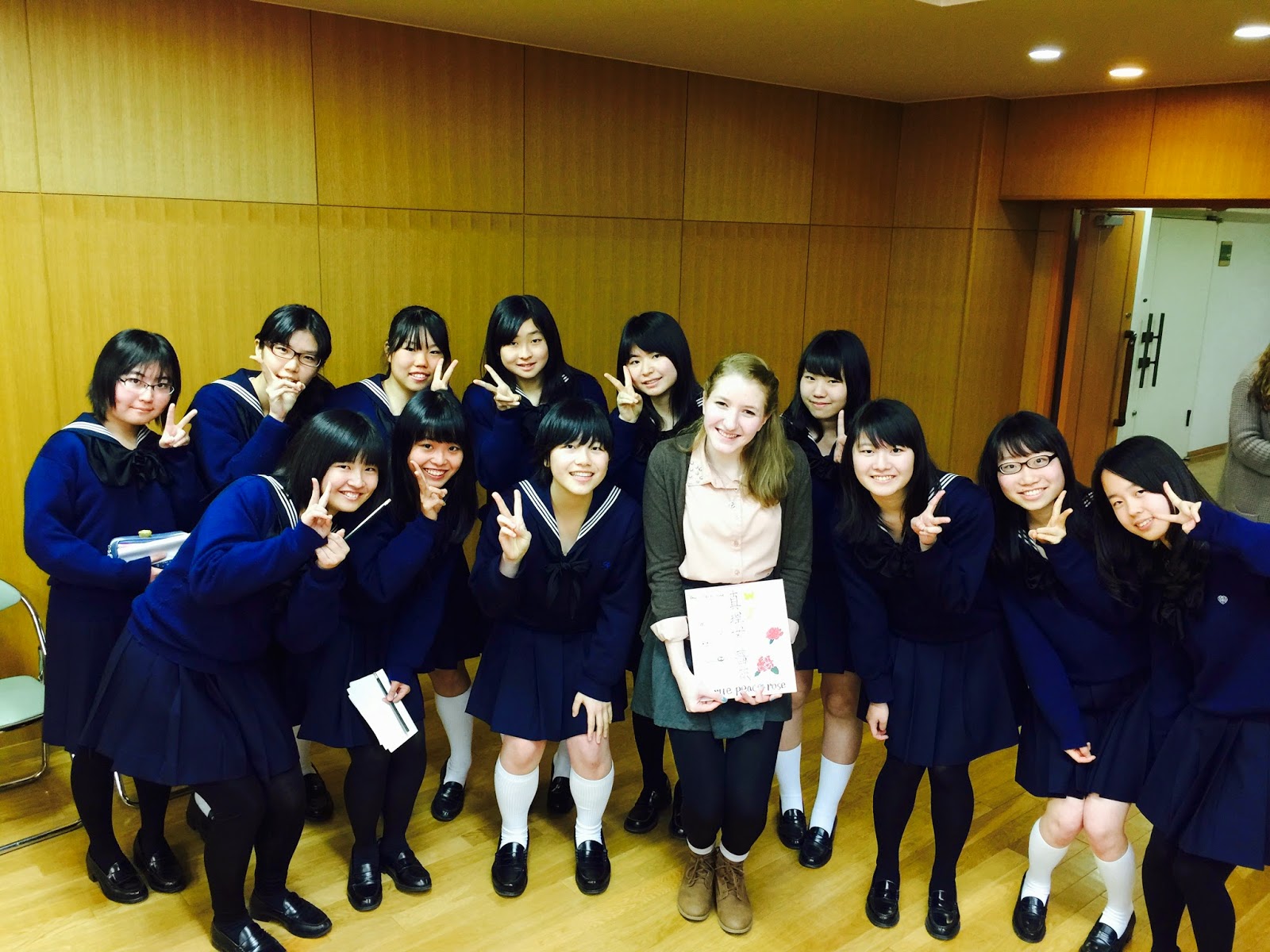
We were greeted very warmly by the Head of the English Department, Ms. Mayumi Negishi, who had been working tirelessly on all the preparations for our visit, and Principal Nishiki. First they let us enjoy a brief rest with some snacks, including a sweet cookie shaped like a dove, a famous treat from Kamakura. After making sure our technology would work as planned (whew!), their junior students began filling the auditorium.

Despite the fact that we had been in Japan less than 24 hours, the Harpeth Hall girls showed no jet lag, probably due to their excitement at meeting the other students. They presented slideshows on Harpeth Hall and Nashville, and then some of the English students treated us to a presentation they had prepared on their beautiful school and city. Then the girls got to break out into groups to chat and exchange gifts. Many of them exchanged address at the end, so I hope they will keep in touch!

It was hard to believe that we squeezed all of that in one hour, but thanks to Ms. Negishi's hard work and the girls' cheerful attitudes, it all flowed smoothly. I truly hope that we can visit again soon - and stay longer next time!


Our first day in Japan: Kamakura


The beginning of our first day in Japan started with a 6:30am wake up call. Morgan and I had already been awake for two hours because we had fallen asleep around 7:00pm the night before. I think we all slept for so long that none of us experienced true jet lag on our first day. We took an hour and a half set of train rides to Kamakura where we spent most of our day. Kamakura was a wonderful first day to have, a beautiful city with hospitable people. We started at a temple called Hase-dera temple with statues that represented miscarriages and babies that had died young. It was a very moving and heartfelt beginning to our trip. 

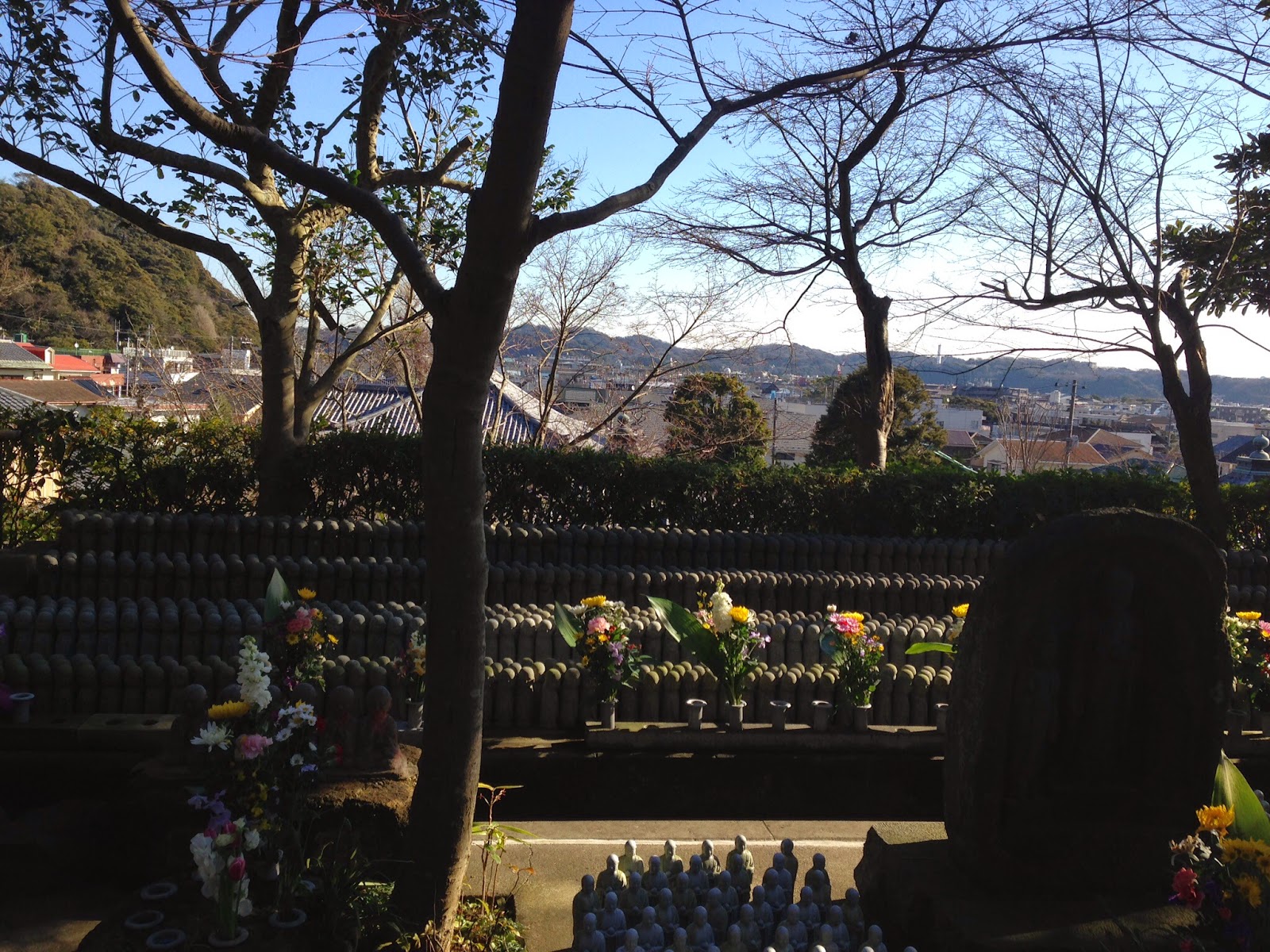
Jizo statues at the Hase-dera temple
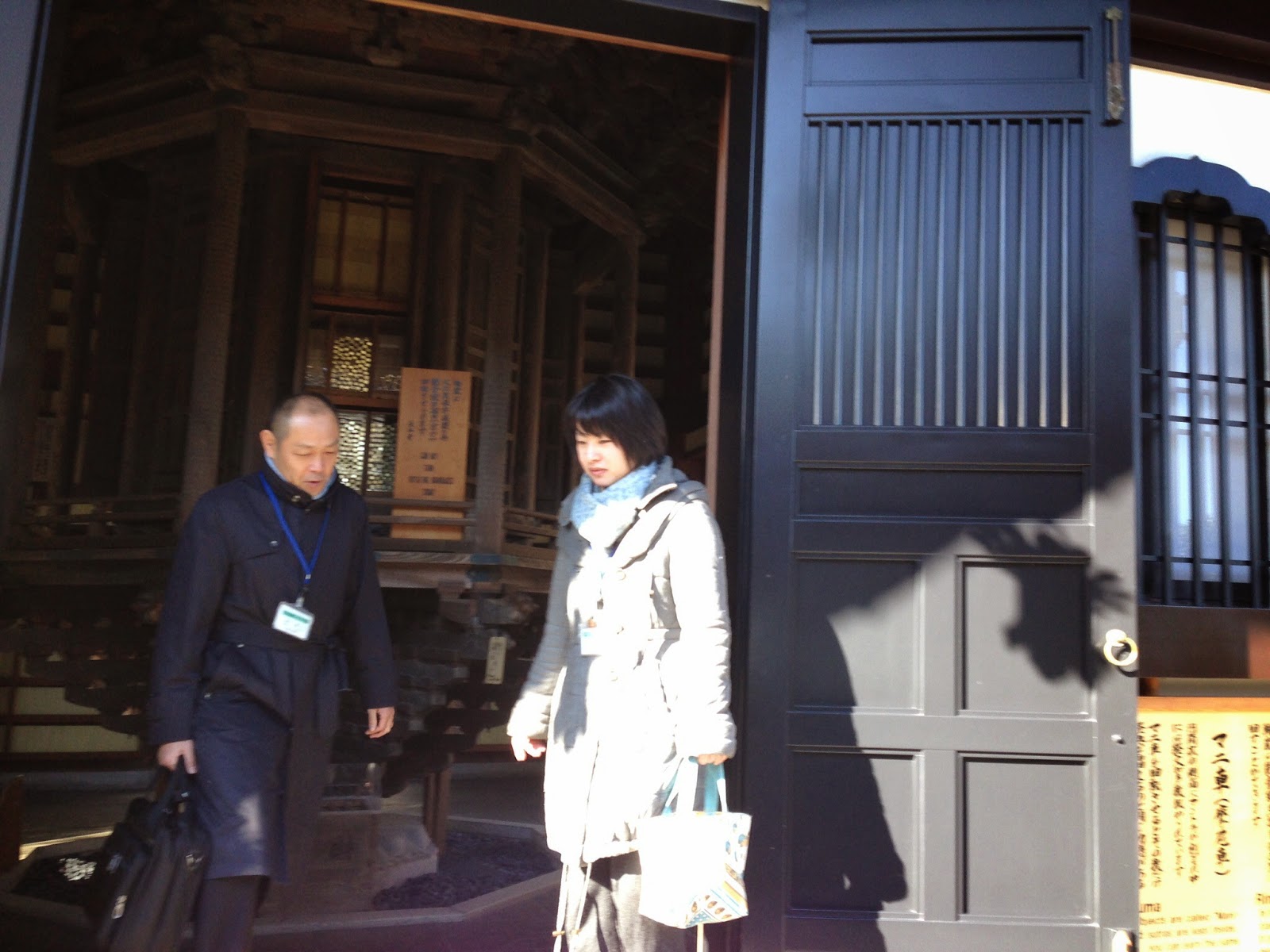
Mr. Hayashi from the Mayor's Office came with us
to the temple to help us.

We visited a sacred temple where we could not take pictures and it contained a beautiful gold and wooden statue of a Bodhisattva. People would throw a coin into a box and say a quick prayer at the Bodhisattva. At this temple sight we had an amazing view of the Pacific Ocean.  I had never seen the Pacific and it was breathtaking. We also went through a cave that had many small figurine statues where people could pay $3 to dedicate a statue by writing their wishes on the back and placing it with other statues. I can attest to the fact that this temple was an eye-opening glimpse into another religion and shed some light on other cultures. 

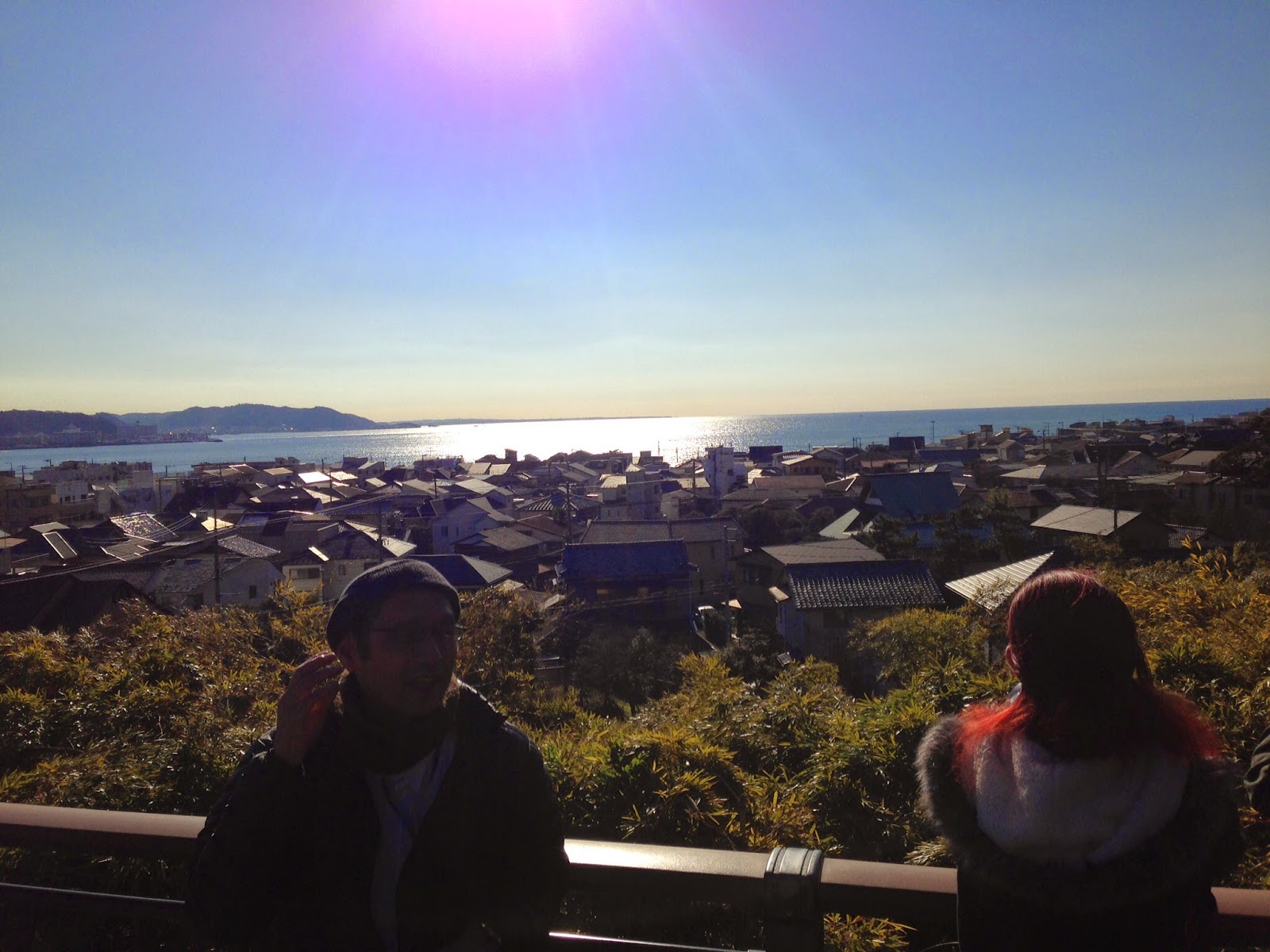
View of the Pacific Ocean from Hase-Kannon Temple


The second place we visited is called Daibutsu which held the Great Buddha. The Great Buddha was a very large bronze statue that is actually hollow. We learned many facts about the statue and many of us even took the narrow and crowded climb to the inside of the statue to learn how it was constructed. Morgan and I even managed to take a “selfie” with the Great Buddha (which happens to be one of my favorite pictures taken so far). 

Morgan and I taking a "selfie" with the Great Buddha

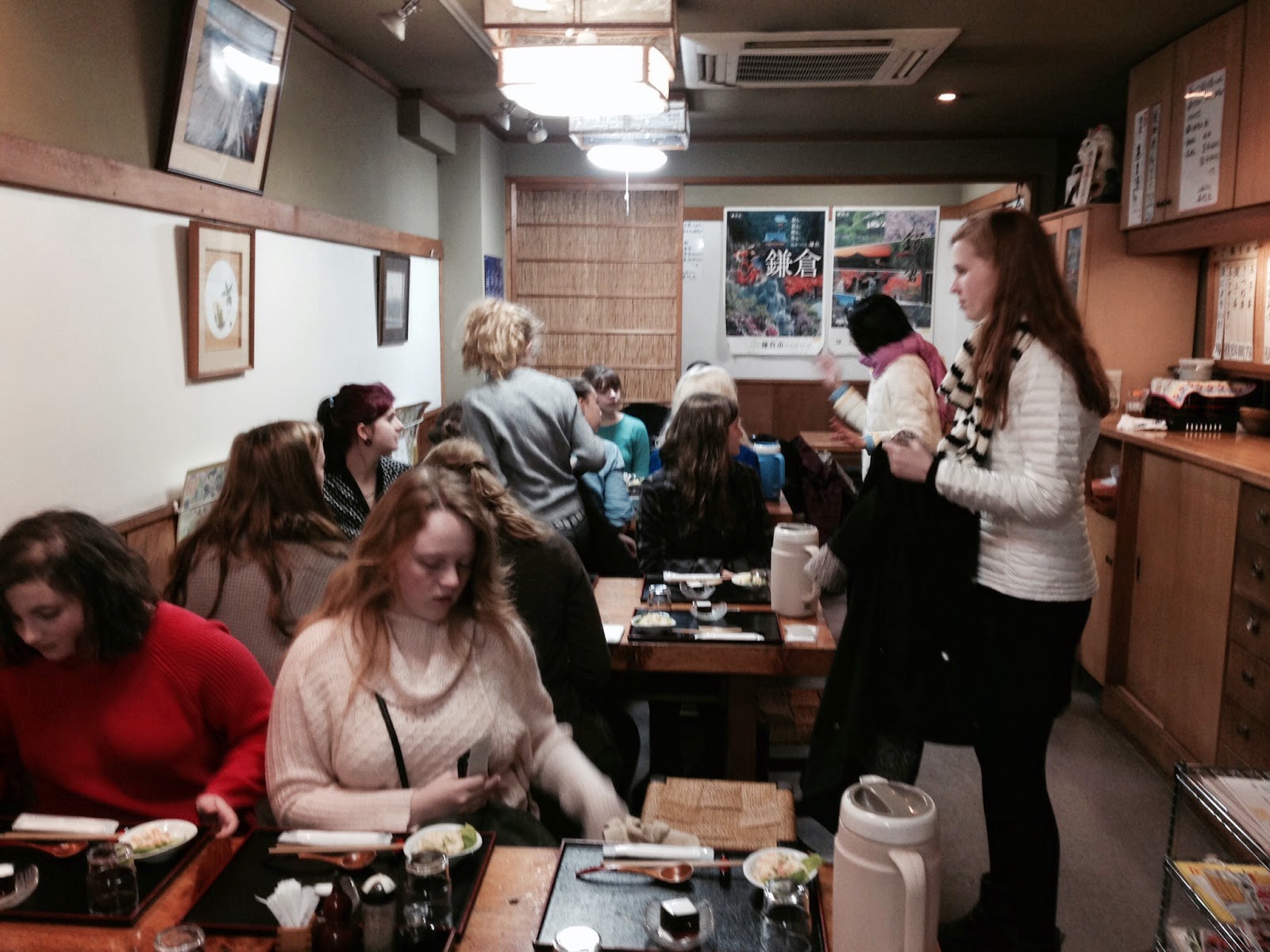
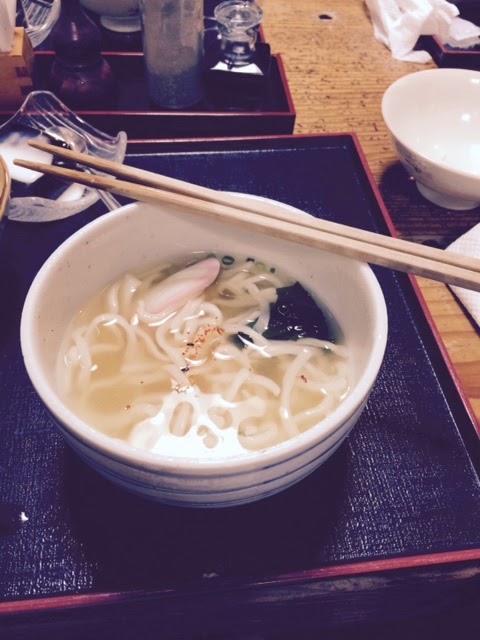
We were then able to enjoy an amazing lunch at Chiyojin, full of udon noodles, miso soup, rice, and the best potato salad we have ever had. I think the most enjoyable part of the lunch was discussing how we can now say that the best potato salad we had ever eaten was eaten in Japan. 

From the Noodle Lunch

Close Up of the Hand-made Noodles

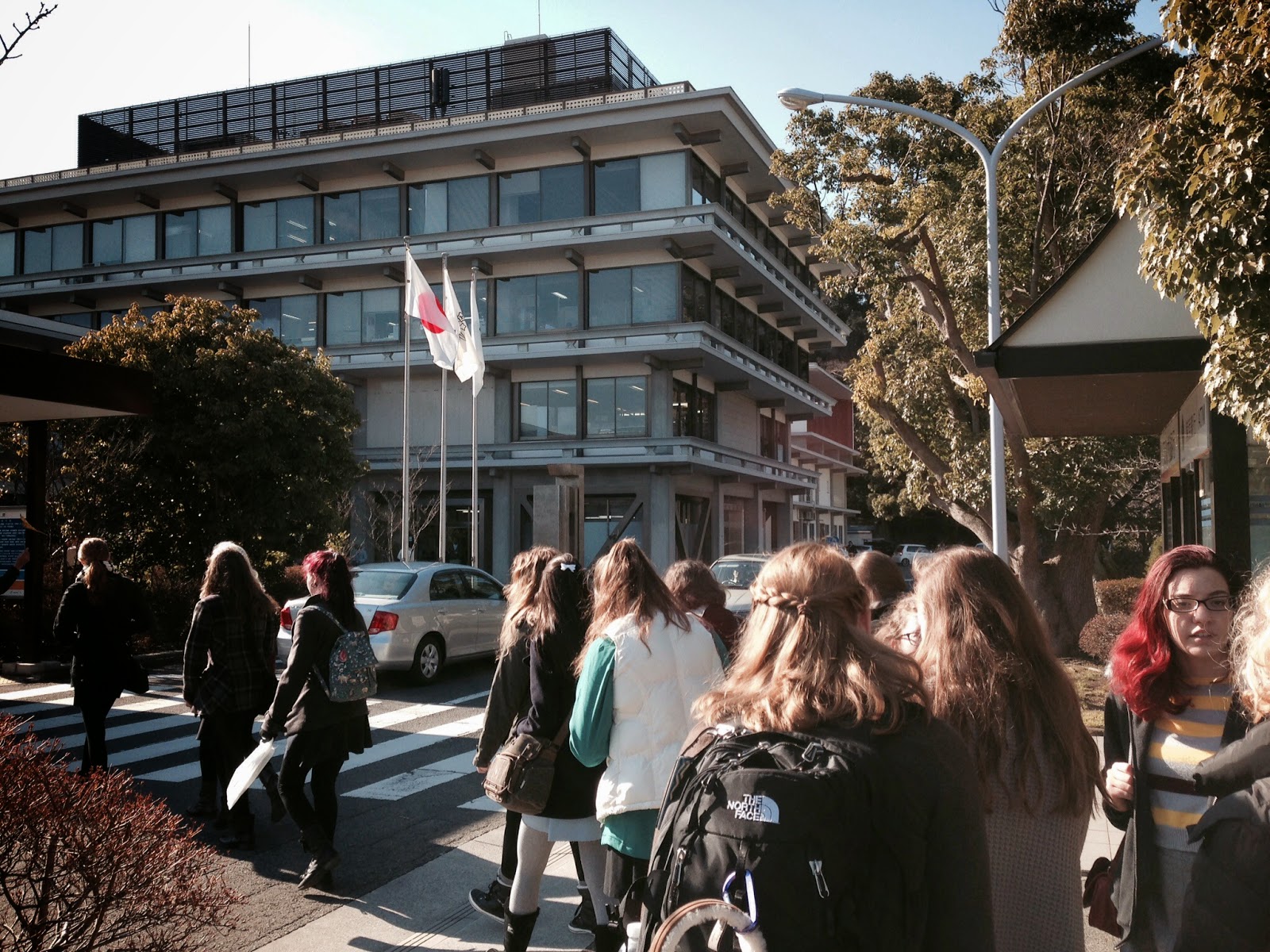
After slurping noodles, eating amazing potato salad, and timidly trying coffee jello, we took a bus ride to the Mayor’s office. We were early so we took time to enjoy shopping in little Kamakura shops. Upon arriving at the Mayor’s office, we immediately were seated in their special conference room. The room was decorated in portraits of past Mayors as well as Nashville posters and Nashville decorations, where we were served a delicious green tea. Matsuo Takashi, the Mayor of Kamakura, was an engaging and kind man who was very hospitable and young. I presented a certificate of friendship to the Mayor from Harpeth Hall, as I was the only member of the Youth Advisory Board for the Sister Cities of Nashville. Kamakura is the most recent addition to the list of Sister Cities with Nashville.   


The entire day we owe to Charlie, our amazing guide, who led us as our translator and overseer through the city. Claire “Tat” and I discussed how he is our personal hero for the day… and for the next 5 days he is with us.  An officer of the Mayor’s office, Mr. Hayashi, was with us all day and observed our presentation to an all-girls school in Kamakura. Mr. Higashi and Mrs. Ban from the Kamakura Nashville Friendship Association were also very helpful in translating and representing Sister Cities. 

Me with My Group

Kamakura was an out-of-this-world experience considering all of the research with which I conducted ahead of time in Nashville. One activity we got to participate in was a religious-type experience in which we rotated three sets of spinning bookshelves found on several different walls at the Hase-dera temple. Because we touched the walls, it is rumored that it is the equivalent to reading all of the sutras and one day perhaps we could be walking priests. My favorite part of this trip is realizing how fashionable every single person is here. I cannot wait to see the fashion districts. This was an amazing first day and I am so pleasantly surprised by how much I love Japan so far.

-Maria-Rose Z, 2015


Harpeth Hall group outside of the Hase-dera Temple in Kamakura
 

Thursday, January 8, 2015

Friends and Family,

Konnichiwa, it's Mrs. Keen.  The Japan team arrived safely and on time today.  With over 24 hours of prepping and in transit, the girls were exhausted (see below).  Mrs. Timmons and I were so proud of the way that our girls handled each leg of the trip.  We have a big day planned in Kamakura tomorrow.  In addition to a tour of the city and the mayor's office, we are presenting at an all-girls school in Kamakura.  With all of the excitement coming our way tomorrow, we need all of the sleep we can get.  We look forward to sending more soon!

Mrs. K